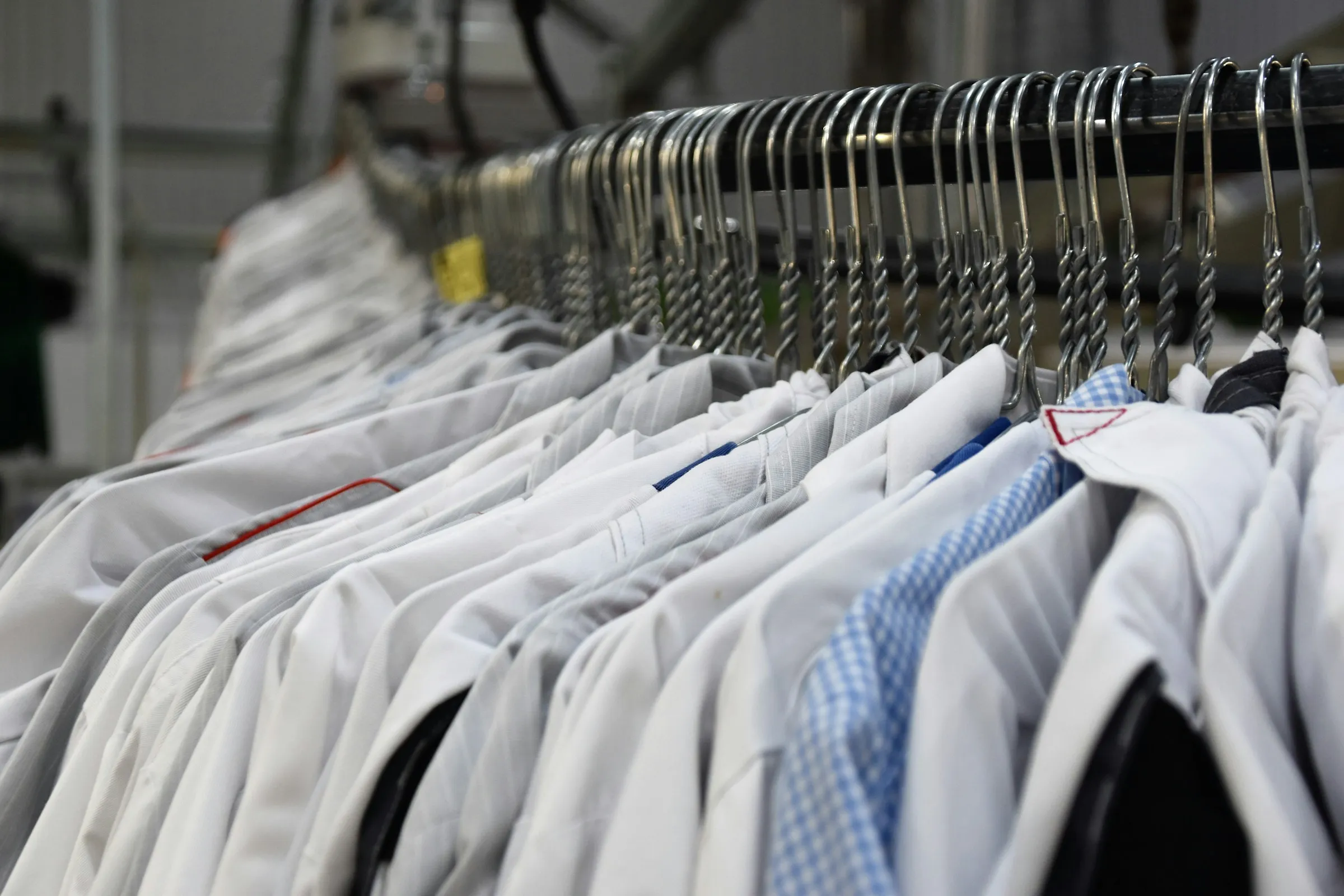
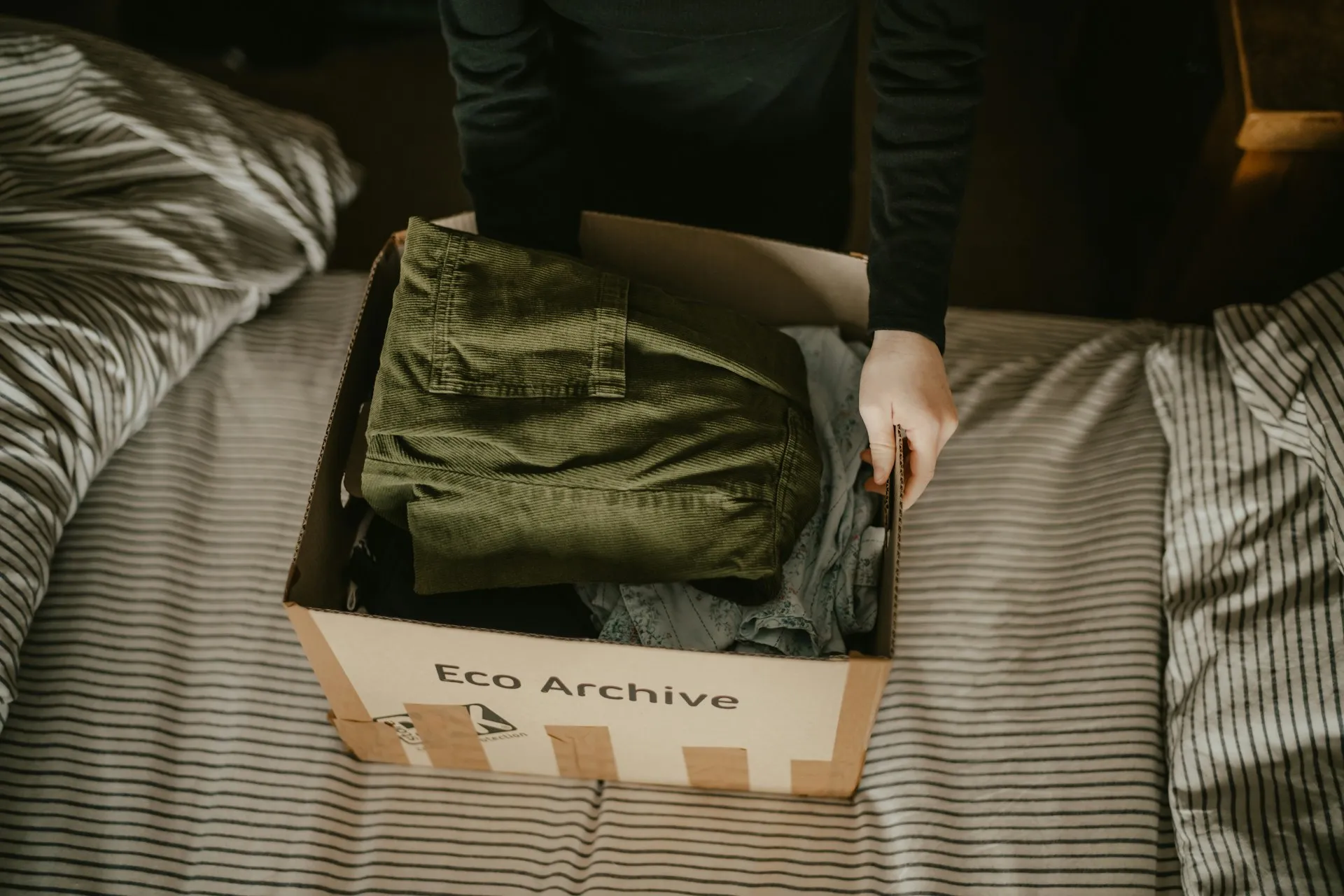
Labour Day is the unofficial deadline for packing summer clothes away, and it’s tempting to fold everything straight from the closet floor into a bin. That shortcut is exactly what turns a box of linen shirts and sundresses into a box of stains, moth holes, and musty fabric by the time you open it again next May.
Why clean-before-storage actually matters
A garment doesn’t need to look dirty to cause problems in storage. Sweat, sunscreen, and body oils are invisible on fabric the day you take it off, but they oxidize slowly over months in a sealed bin or garment bag, turning into yellow-brown stains that weren’t there when you packed the item away. By the time you notice, the stain has set for months, not hours, and it’s far harder to treat than it would have been in June.
Those same residues are also what attracts moths and carpet beetles. Moths aren’t actually drawn to clean fabric, they’re drawn to the food source: sweat, skin oils, and food residue left in fibres. A truly clean garment in storage is far less likely to come back with holes in it, while a “close enough” one is an open invitation.
Odour works the same way. Anything packed away slightly damp, or with any residue still in the fibres, sits in a sealed container for months with no airflow. What goes in as a faint smell often comes out as a musty one that’s hard to fully air out.
Linen and whites need their own routine
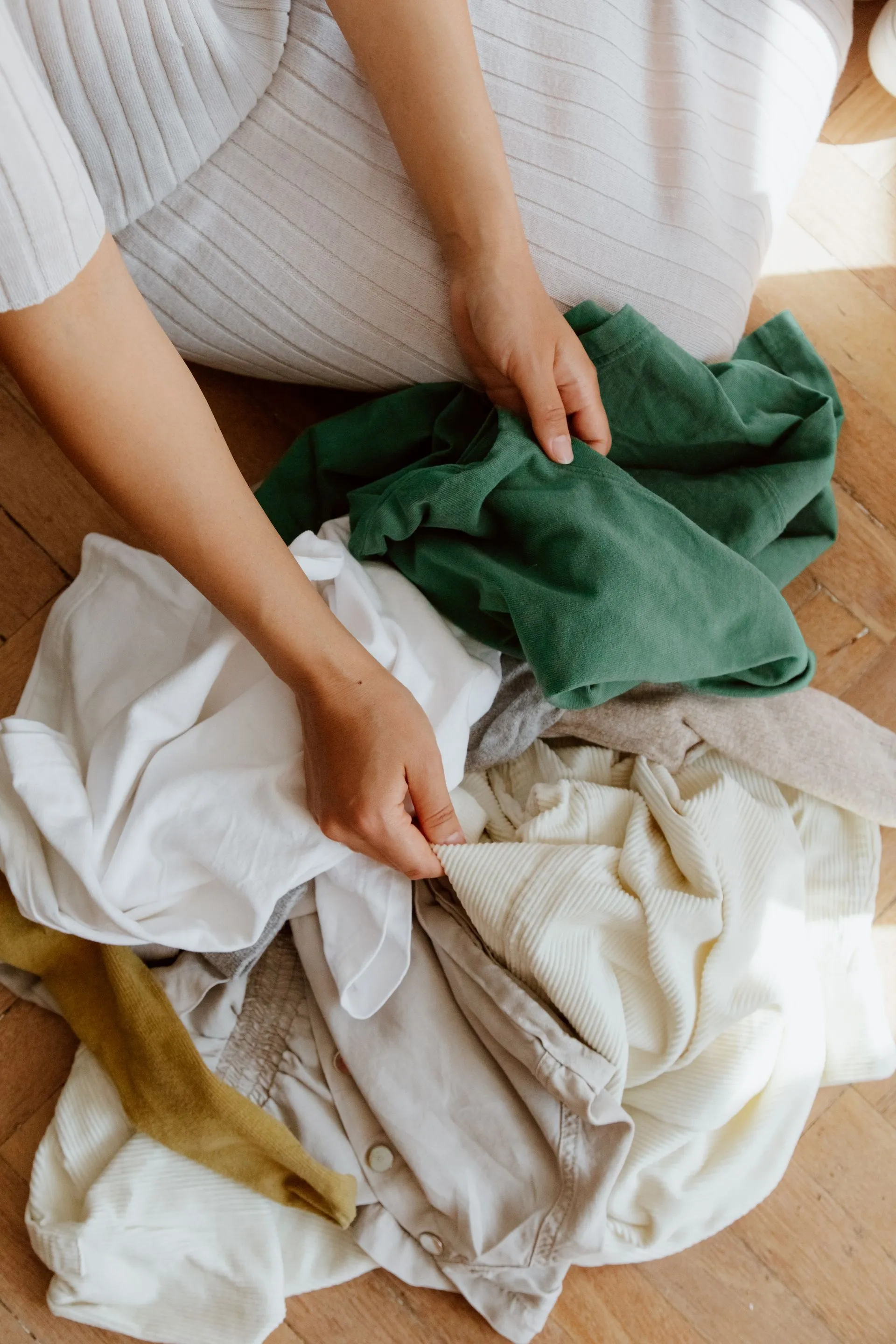
Linen and white fabrics are the two categories most likely to come out of storage looking worse than they went in, and they need a bit more care than a cotton tee.
- Linen wrinkles into permanent creases if it’s folded tightly for months. Fold it loosely, or roll it instead of folding on a sharp crease line, so you’re not setting a fold mark into the fibre for an entire season.
- Whites need to go in completely stain-free, including stains you can’t see yet. Any residue on white fabric oxidizes into yellowing over time, and unlike colour, there’s no print or pattern to hide it. This is the category where “it looked fine when I packed it” causes the most regret.
- Starch and heavy sizing attract pests and hold moisture. If a linen piece was starched for a summer event, have it professionally cleaned before storage rather than just washing it at home, since home washing doesn’t always fully remove starch from the weave.
- Skip the plastic bags for linen specifically. Linen needs to breathe more than most fabrics. A breathable garment bag or cotton storage bag beats sealed plastic, which traps humidity against a fabric that’s already prone to mildew if it’s ever slightly damp.
The short version
Wash or dry clean everything before it goes into a bin, based on what the care label calls for, not what feels easiest, dry it completely so there’s no trapped moisture, and store it in a breathable bag or a bin in a cool, dry space rather than a hot attic or damp basement. That’s it. The extra step before storage is what makes the unpacking next spring take five minutes instead of a trip to the cleaners for stains that could’ve been avoided.
Let us handle the pre-storage clean
If your summer wardrobe needs a proper clean before it goes into bins, we can handle both sides of it: dry cleaning for linen, silk, and anything structured, and wash & fold for the everyday cottons and whites. Everything comes back completely clean and ready to pack away, not just fresh enough to pass a smell test, with pickup and delivery across Downtown Toronto and Scarborough.